What a country! as the Russian comedian Yakov Smirnoff would say.
Smirnoff came to the U.S. in the days when people from the old Eastern Block would risk life and limb to try to get here. Today the only limbs at risk when we allow political sanctuary are our own.
There was a lot more freedom in the U.S. then: Freedom from fear, freedom from foreclosure, freedom to work, freedom to run a marathon, freedom to love the country without being called a tea bagger; freedom for citizens to do their part with the government staying out of the way.
It?s changed now.
Now we root for the bad guys, - bad guys, who are a protected species- and support people who hate our own country.
A liberal writer from Salon, David Sirota, led off the hate parade last week with this sparkling prayer: Let?s hope the Boston Marathon bomber is a white American.
He should have added: ?please, dear God.?
Of course it would have offended his liberal readers when he invoked God. Let me remind them, however, that even Joseph Stalin, white guy and former seminarian, invoked the Almighty from time to time.
Sirota quotes professional race baiter and other white guy, Tim Wise, with this justification of his prayer: ??White privilege is knowing that if this bomber turns out to be white, the United States government will not bomb whatever corn field or mountain town or stale suburb from which said bomber came, just to ensure that others like him or her don?t get any ideas. And if he turns out to be a member of the Irish Republican Army we won?t bomb Dublin.?
Yeah those greedy, white Catholics in Dublin were so privileged that they were never targeted by other white guys- were they? No bombs in Dublin, right?
Nor was David Koresh, white guy, assaulted by a tank down in Waco, Texas for his crimes. Tim McVeigh? The lethal injection was too good for him.?? ?????
But alas, we all have to live with disappointment, David, Tim and I do.
New Zealand lawmaker Louisa Wall, who sponsored the gay marriage bill, stands on the steps of Parliament in Wellington before voting for the same-sex marriage Tuesday, April 16, 2013. New Zealand has become the 13th country in the world and the first in the Asia-Pacific region to legalize same-sex marriage. Hundreds of jubilant gay-rights advocates celebrated at New Zealand's Parliament today after lawmakers vote 77 to 44 in favor of the gay-marriage bill. (AP Photo/Nick Perry)
New Zealand lawmaker Louisa Wall, who sponsored the gay marriage bill, stands on the steps of Parliament in Wellington before voting for the same-sex marriage Tuesday, April 16, 2013. New Zealand has become the 13th country in the world and the first in the Asia-Pacific region to legalize same-sex marriage. Hundreds of jubilant gay-rights advocates celebrated at New Zealand's Parliament today after lawmakers vote 77 to 44 in favor of the gay-marriage bill. (AP Photo/Nick Perry)
Jills Angus Burney, left, and Deborah Hambly, who are hoping to get married themselves, arrive at New Zealand's Parliament in Wellington to watch lawmakers vote on gay marriage Wednesday, April 17, 2013. New Zealand has become the 13th country in the world and the first in the Asia-Pacific region to legalize same-sex marriage. Hundreds of jubilant gay-rights advocates celebrated at New Zealand's Parliament today after lawmakers vote 77 to 44 in favor of the gay-marriage bill. (AP Photo/Nick Perry)
WELLINGTON, New Zealand (AP) ? Hundreds of jubilant gay-rights advocates celebrated at New Zealand's Parliament on Wednesday as the country became the 13th in the world and the first in the Asia-Pacific region to legalize same-sex marriage.
Lawmakers voted 77 to 44 in favor of the gay-marriage bill on its third and final reading.
People watching from the public gallery and some lawmakers immediately broke into song after the result was announced, singing the New Zealand love song "Pokarekare Ana" in the indigenous Maori language.
"For us, we can now feel equal to everyone else," said Tania Penafiel Bermudez, a bank teller who said she already considers herself married to partner Sonja Fry but now can get a certificate to prove it. "This means we can feel safe and fair and right in calling each other wife and wife."
In one of several speeches that ended in a standing ovation, bill sponsor Louisa Wall told lawmakers the change was "our road toward healing."
"In our society, the meaning of marriage is universal ? it's a declaration of love and commitment to a special person," she said. She added that "nothing could make me more proud to be a New Zealander than passing this bill."
Lawmakers from most political parties were encouraged by their leaders to vote as their conscience dictated rather than along party lines. Although Wall is from the opposition Labour Party, the bill also was supported by center-right Prime Minister John Key.
"In my view, marriage is a very personal thing between two individuals," Key said. "And, in the end, this is part of equality in modern-day New Zealand."
Since 2005, New Zealand has allowed civil unions, which confer many legal rights to gay couples. The new law will allow gay couples to jointly adopt children for the first time and will also allow their marriages to be recognized in other countries. The law will take effect in late August.
"This is really, really huge," said Jills Angus Burney, a lawyer who drove about 90 minutes to Parliament to watch the vote with her partner, Deborah Hambly, who had flown in from farther afield. "It's really important to me. It's just unbelievable."
Burney, a Presbyterian, said she and Hambly want to celebrate with a big, traditional wedding as soon as possible.
The change in New Zealand could put pressure on some of its neighbors to consider changing their laws. In Australia, there has been little political momentum for a change at a federal level and Prime Minister Julia Gillard has expressed her opposition to same-sex marriage. Some Australian states, however, are considering gay-marriage legislation.
Rodney Croome, the national director for the lobbying group Australian Marriage Equality, said that since Friday, 1,000 people had signed an online survey saying they would travel to New Zealand to wed, though same-sex marriages would not be recognized under current Australian law.
"There's this really big, pent-up demand for this in Australia," Croome said. "New Zealand is just a three-hour plane ride away, and many couples are going to go to New Zealand to marry. They are just so sick and tired of waiting for the government to act. I think it's going to spark this big tourism boom."
Many people in New Zealand remain vehemently opposed to gay marriage. The lobbying group Family First last year presented a petition to Parliament signed by 50,000 people who opposed the bill. Another 25,000 people have since added their signatures to that petition.
"Historically and culturally, marriage is about man and a woman, and it shouldn't be touched," said Family First founder Bob McCoskrie. "It doesn't need to be."
McCoskrie said same-sex marriage should have been put to a public referendum rather than a parliamentary vote. That might not have changed the outcome, however: Surveys indicate that about two-thirds of New Zealanders favor gay marriage.
The change was given impetus last May when U.S. President Barack Obama declared his support for gay marriage. That prompted Prime Minister Key to break his silence on the issue by saying he was "not personally opposed" to the idea. Wall then put forward the bill, which she had previously drafted.
Same-sex marriage is recognized in the Netherlands, Belgium, Spain, Canada, South Africa, Norway, Sweden, Portugal, Iceland, Argentina and Denmark. Lawmakers in Uruguay approved a law last week that President Jose Mujica is expected to sign. Nine states in the U.S. also recognize such marriages, but the federal government does not.
In his speech before Wednesday's vote, lawmaker Tau Henare extended a greeting to people of all sexual identities and concluded with a traditional greeting in his indigenous Maori.
"My message to you all is, 'Welcome to the mainstream,'" Henare said. "Do well. Kia Ora."
New scorecard shows inequalities in osteoporosis care in the Europe UnionPublic release date: 17-Apr-2013 [ | E-mail | Share ]
Contact: L. Misteli news@iofbonehealth.org 41-229-940-100 International Osteoporosis Foundation
Despite marked differences in fracture risk and services, all countries show a worrying treatment gap -- approximately 57 percent of high risk individuals are left untreated
Today a panel of international experts working in cooperation with the International Osteoporosis Foundation (IOF) have published SCOPE or Scorecard for Osteoporosis in Europe.
Focusing on key aspects of service provision and uptake, the Scorecard compares how the 27 different countries within the European Union (EU) care for people with osteoporosis to reduce their risk of bone fractures. Fractures, which mostly affect older adults, can result in pain, long-term disability and even premature death.
The Scorecard presents, measures and compares data in a way that is simple to see and interpret, sets benchmarks, and measures critical indicators of overall performance. SCOPE covers four main indicators of osteoporosis:
Burden of osteoporosis and fractures, including forecasts for the future
Policy framework availability of public health programmes
Service provision assessment and treatments of osteoporosis
Service uptake e.g. treatment gap, the proportion of men and women at high risk who don't receive treatment
The Scorecard reveals that countries with a higher risk of fracture and incidence of osteoporosis do not always make the largest investment in fracture reduction and treatment. This indicates that services are not aligned or operating efficiently enough to reduce the risk of fractures, which cost in excess of 37 billion and cause about 43,000 deaths each year in Europe. It is hoped that the scorecard will help to inform a Europe-wide strategy for osteoporosis that aims to reduce fractures, costs and the burden in the population.
Several of the key findings of the Scorecard are:
The majority of high-risk individuals remain untreated. Less than half of women at high risk of fracture are treated despite the high cost of fractures and the availability of effective medications;
Facilities and access to testing for osteoporosis, as well as utilization of fracture risk algorithms, are inadequate in the majority of countries;
In some countries individuals with osteoporosis are restricted from accessing effective treatment options;
Access to drug treatment that can help prevent fractures varies significantly from country to country;
Fracture incidence is poorly documented in the EU; national hip fracture registries for both sexes are available in only 15 of the 27 member states and only two countries have data on the incidence of clinical vertebral fractures;
There is a nearly three-fold range of hip fractures throughout the EU ranging from 198 per 100,000 people in Romania to 574 per 100,000 in Denmark;
The SCOPE Scorecard can be accessed at http://www.iofbonehealth.org/scope-scorecard-osteoporosis-europe
"This scorecard draws attention to gaps and inequalities in the provision of primary and secondary prevention of fractures due to osteoporosis in all 27 member states of the EU," said IOF President Professor John Kanis of the WHO Collaborating Centre for Metabolic Bone Diseases, University of Sheffield Medical School. "We call on policymakers at all levels to develop Europe-wide strategies and parallel national strategies to provide coordinated osteoporosis care and to reduce debilitating fractures and their impact on individual lives and the healthcare system."
Professor Juliet Compston, Professor of Bone Medicine at the University of Cambridge and Chair of the European Osteoporosis Consultation Panel commented, "Fractures due to osteoporosis are a major cause of disability and early death in Europe's older population. There are currently around 3.5 million new fractures per year at a direct cost of approximately 37.4 billion. These costs do not reflect the enormous human costs in terms of pain, disability, loss of quality of life or the need for long-term nursing care. Unless preventive strategies are put in place, this burden will grow significantly as projections show that by 2025 the population of women and men over the age of 50 will increase by 22% and 17% respectively."
More than 100 national osteoporosis and bone-related societies in Europe are members of the International Osteoporosis Foundation and many participated actively in the compilation of the Scorecard.
Speaking at the media launch of the report in Rome, Professor Maria Luisa Brandi, President of IOF member society F.I.R.M.O (Fondazione Raffaella Becagli), stated, " This Scorecard should be used by EU member states to identify which areas of policy and service provision require improvement in order to reduce the current and future burden of fractures. It is evident that for most countries, more data are needed and certain targeted strategies, such as Fracture Liaison Services, must be put in place to identify and treat patients at high risk."
###
References:
SCOPE: A scorecard for osteoporosis in Europe
Upcoming publication in the online journal Archives of Osteoporosis http://link.springer.com/journal/11657
Osteoporosis in the European Union: Medical Management, Epidemiology and Economic Burden Arch Osteoporos 2013
Hernlund E, Svedbom A, Ivergard M, Compston J, et. al. A report prepared in collaboration with the International Osteoporosis Foundation (IOF) and the European Federation of Pharmaceutical Industry Associations (EFPIA). Arch Osteoporos 2013 [in press]
Osteoporosis in the European Union: A compendium of country-specific reports. Svedbom A, Hernlund E, Ivergard M, et al. Arch Osteoporos 2013 [in press].
About SCOPE
The ScoreCard for OsteoPorosis in Europe (SCOPE) is an independent project that seeks to raise the awareness of osteoporosis care in Europe. Led by a multi-stakeholder group of experts and chaired by Professor John Kanis, President of the International Osteoporosis Foundation (IOF), this project will, for the first time, enable an in depth comparison of the quality of care of osteoporosis across the European Union's 27 member states. In creating a scorecard the group intends to set a benchmark for best practice management of osteoporosis and achieve marked improvements in the quality of care of the disease throughout the EU.
SCOPE draws on independent research from two major sources: IOF audits compiled by IOF member national osteoporosis societies in Europe, as well as the comprehensive new report 'Osteoporosis in the European Union: Medical Management, Epidemiology and Economic Burden'. The detailed report behind SCOPE is soon to be published in the journal 'Archives of Osteoporosis'. From this data, a one-page scorecard was developed to provide a unique overview of the status of osteoporosis in Europe.
About IOF
The International Osteoporosis Foundation (IOF) is the world's largest nongovernmental organization dedicated to the prevention, diagnosis and treatment of osteoporosis and related musculoskeletal diseases. IOF members, including committees of scientific researchers as well as more than 200 patient, medical and research societies, work together to make bone, joint and muscle health a worldwide heath care priority. http://www.iofbonehealth.org
[ | E-mail | Share ]
?
AAAS and EurekAlert! are not responsible for the accuracy of news releases posted to EurekAlert! by contributing institutions or for the use of any information through the EurekAlert! system.
New scorecard shows inequalities in osteoporosis care in the Europe UnionPublic release date: 17-Apr-2013 [ | E-mail | Share ]
Contact: L. Misteli news@iofbonehealth.org 41-229-940-100 International Osteoporosis Foundation
Despite marked differences in fracture risk and services, all countries show a worrying treatment gap -- approximately 57 percent of high risk individuals are left untreated
Today a panel of international experts working in cooperation with the International Osteoporosis Foundation (IOF) have published SCOPE or Scorecard for Osteoporosis in Europe.
Focusing on key aspects of service provision and uptake, the Scorecard compares how the 27 different countries within the European Union (EU) care for people with osteoporosis to reduce their risk of bone fractures. Fractures, which mostly affect older adults, can result in pain, long-term disability and even premature death.
The Scorecard presents, measures and compares data in a way that is simple to see and interpret, sets benchmarks, and measures critical indicators of overall performance. SCOPE covers four main indicators of osteoporosis:
Burden of osteoporosis and fractures, including forecasts for the future
Policy framework availability of public health programmes
Service provision assessment and treatments of osteoporosis
Service uptake e.g. treatment gap, the proportion of men and women at high risk who don't receive treatment
The Scorecard reveals that countries with a higher risk of fracture and incidence of osteoporosis do not always make the largest investment in fracture reduction and treatment. This indicates that services are not aligned or operating efficiently enough to reduce the risk of fractures, which cost in excess of 37 billion and cause about 43,000 deaths each year in Europe. It is hoped that the scorecard will help to inform a Europe-wide strategy for osteoporosis that aims to reduce fractures, costs and the burden in the population.
Several of the key findings of the Scorecard are:
The majority of high-risk individuals remain untreated. Less than half of women at high risk of fracture are treated despite the high cost of fractures and the availability of effective medications;
Facilities and access to testing for osteoporosis, as well as utilization of fracture risk algorithms, are inadequate in the majority of countries;
In some countries individuals with osteoporosis are restricted from accessing effective treatment options;
Access to drug treatment that can help prevent fractures varies significantly from country to country;
Fracture incidence is poorly documented in the EU; national hip fracture registries for both sexes are available in only 15 of the 27 member states and only two countries have data on the incidence of clinical vertebral fractures;
There is a nearly three-fold range of hip fractures throughout the EU ranging from 198 per 100,000 people in Romania to 574 per 100,000 in Denmark;
The SCOPE Scorecard can be accessed at http://www.iofbonehealth.org/scope-scorecard-osteoporosis-europe
"This scorecard draws attention to gaps and inequalities in the provision of primary and secondary prevention of fractures due to osteoporosis in all 27 member states of the EU," said IOF President Professor John Kanis of the WHO Collaborating Centre for Metabolic Bone Diseases, University of Sheffield Medical School. "We call on policymakers at all levels to develop Europe-wide strategies and parallel national strategies to provide coordinated osteoporosis care and to reduce debilitating fractures and their impact on individual lives and the healthcare system."
Professor Juliet Compston, Professor of Bone Medicine at the University of Cambridge and Chair of the European Osteoporosis Consultation Panel commented, "Fractures due to osteoporosis are a major cause of disability and early death in Europe's older population. There are currently around 3.5 million new fractures per year at a direct cost of approximately 37.4 billion. These costs do not reflect the enormous human costs in terms of pain, disability, loss of quality of life or the need for long-term nursing care. Unless preventive strategies are put in place, this burden will grow significantly as projections show that by 2025 the population of women and men over the age of 50 will increase by 22% and 17% respectively."
More than 100 national osteoporosis and bone-related societies in Europe are members of the International Osteoporosis Foundation and many participated actively in the compilation of the Scorecard.
Speaking at the media launch of the report in Rome, Professor Maria Luisa Brandi, President of IOF member society F.I.R.M.O (Fondazione Raffaella Becagli), stated, " This Scorecard should be used by EU member states to identify which areas of policy and service provision require improvement in order to reduce the current and future burden of fractures. It is evident that for most countries, more data are needed and certain targeted strategies, such as Fracture Liaison Services, must be put in place to identify and treat patients at high risk."
###
References:
SCOPE: A scorecard for osteoporosis in Europe
Upcoming publication in the online journal Archives of Osteoporosis http://link.springer.com/journal/11657
Osteoporosis in the European Union: Medical Management, Epidemiology and Economic Burden Arch Osteoporos 2013
Hernlund E, Svedbom A, Ivergard M, Compston J, et. al. A report prepared in collaboration with the International Osteoporosis Foundation (IOF) and the European Federation of Pharmaceutical Industry Associations (EFPIA). Arch Osteoporos 2013 [in press]
Osteoporosis in the European Union: A compendium of country-specific reports. Svedbom A, Hernlund E, Ivergard M, et al. Arch Osteoporos 2013 [in press].
About SCOPE
The ScoreCard for OsteoPorosis in Europe (SCOPE) is an independent project that seeks to raise the awareness of osteoporosis care in Europe. Led by a multi-stakeholder group of experts and chaired by Professor John Kanis, President of the International Osteoporosis Foundation (IOF), this project will, for the first time, enable an in depth comparison of the quality of care of osteoporosis across the European Union's 27 member states. In creating a scorecard the group intends to set a benchmark for best practice management of osteoporosis and achieve marked improvements in the quality of care of the disease throughout the EU.
SCOPE draws on independent research from two major sources: IOF audits compiled by IOF member national osteoporosis societies in Europe, as well as the comprehensive new report 'Osteoporosis in the European Union: Medical Management, Epidemiology and Economic Burden'. The detailed report behind SCOPE is soon to be published in the journal 'Archives of Osteoporosis'. From this data, a one-page scorecard was developed to provide a unique overview of the status of osteoporosis in Europe.
About IOF
The International Osteoporosis Foundation (IOF) is the world's largest nongovernmental organization dedicated to the prevention, diagnosis and treatment of osteoporosis and related musculoskeletal diseases. IOF members, including committees of scientific researchers as well as more than 200 patient, medical and research societies, work together to make bone, joint and muscle health a worldwide heath care priority. http://www.iofbonehealth.org
[ | E-mail | Share ]
?
AAAS and EurekAlert! are not responsible for the accuracy of news releases posted to EurekAlert! by contributing institutions or for the use of any information through the EurekAlert! system.
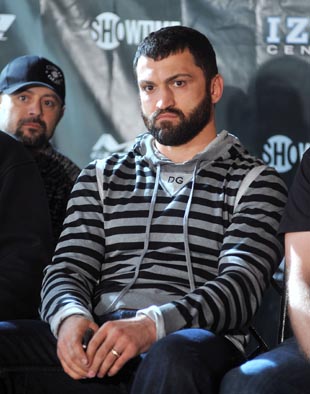
Just days after Nick Diaz's camp criticized the athletic commission in Quebec for their handling of his UFC 158 weigh-in with UFC welterweight champ Georges St-Pierre, another athletic commission is under fire. Jackson's MMA, the gym who backs Andrei Arlovski, said a timing error by the New Jersey State Athletic Control Board resulted in Arlovski's broken jaw.
Arlovski lost to Anthony Johnson in a World Series of Fighting bout on Saturday. Jackson's MMA posted on their Facebook about the timekeeping problem:
The NJ athletic commission was worried about the World Series of Fighting getting a new canvas and new corner pads for the cage they almost canceled the fight Saturday night. Unfortunately they forgot to get a time keeper that was trained properly. 1st round 5min 8 sec in the Andrei fight. A devastating blow was landed after the 5min mark. It's amazing how so much time is spent with over regulating but the simple things can cost dearly.
WSOF had to bring in a new canvas and pads when the ones they originally had were unsuitable. But the timing error is much worse. Check out this video via MMA Fighting, and listen to the wood clacking at the 10-second mark. The clock disappears from the screen at seven seconds. Even a generous countdown shows the fight went past the five-minute mark.
The worst part is that the damage Johnson caused came after the time should have expired. His jaw was broken, and it needed surgery for repair. It also raises questions on if the fight result would have been different if Arlovski wouldn't have been hurt late in the first round.
Job Title: Marketing Communication Specialist ? Fixed Term Contract City: Tygervalley Division: Sanlam Job Category: Financial Services Business Unit: Sanlam Investment Cluster Position Type: Fixed Term ? Contract Education Required: Diploma
The Investment Services Sub-Cluster aims to provide institutional and retail clients with a superior investment experience by offering access to a range of single and multi manager funds via our underlying businesses. Sanlam Multi Manager International (SMMI) provides tailor-made multi managed solutions that blend the top investment managers into funds that are designed to meet a variety of investment needs. Blue Ink Investments is one of South Africa?s leading fund of hedge fund managers, with one of the longest track records in the country. Graviton provides financial planners with the highest-quality investment management and business support services, freeing up their time so they are better able to help their investors achieve their financial well-being and goals. Sanlam Collective Investments (SCI) is one of the oldest and most respected unit trust companies in South Africa , offering clients a wide selection of funds.
Key Responsibilities
Marketing Communications
Copywriting material for publication
Assist with the development of stories through a strong understanding of the business
Source material for press releases and articles
Develop strategies suited to each business and target market
Seek approval from executives
Building relationships with targeted audiences
Liaise with agencies
Review website content and update to ensure it remains relevant to business needs
Branding
Develop marketing collateral as required
Agency/writer/creative briefing and project management
Brochureware sourcing/distribution/maintenance
Creative control
Apply branding standards
Other
Content/thought leadership sourcing and packaging as required
Business representation at forums
Stakeholder management
A thorough understanding of the business and its key objectives
Minimum Requirements
Matric/ relevant degree/diploma
Experience within financial services is preferable
Minimum of 3 years related experience essential
Competencies
Technical Competencies:
Computer literacy (MS word, Power Point, Excel)
Behavioral Competencies:
Excellent communication, writing and interpersonal skills
Power Play International, a Social Media Marketing and Website Design Agency, today released its enhanced web services.
New York, Melville (PRWEB) March 26, 2013
Power Play International, a Long Island Web Design Company as well as a leading Internet marketing company headquartered in Melville, New York, today released its increased web services roll. The list is critical to companies seeking to update their online business existence, manage their on-line standing as well as for those ?small businesses just starting out.?
?The Internet Market is competitive on an international scale,? notes Dean Spinato, President and Director of Business Development, Power Play International, Inc. ?Even successful web businesses need to update to keep up with ever-changing search engine algorithms, search engine optimization is constantly shifting?all businesses must be prepared for Google Penguin. With the latest Google Penguin algorithm update, designed to weed out Internet pollution and junk, Google is getting more particular about how sites are judged on quality,? Mr. Spinato states. However, it is important to understand what businesses need, then choose a firm that can meet if not exceed your expectations. Tendencies that have become essential include: custom content development, social media extensions, applicable web design, media experience and cellular sites. The key is finding a good price for a clients business that will be best served by a job.
The manner that Power Play International reacts to their client?s needs to keep up and grow their businesses. PPI will work with the client to develop a branded web design that will best meet your business goals. Power Play International will complete and collaborate a comprehensive intake form to identify their needs. As a guide making use of this, NYC Web Design team will create a design and execution strategy that accomplishes the companies vision. This will be an interactional process that results in a unique site and on-line engine that will forever improve the companies brand.
About Power Play International:
Power Play International is a gifted, seasoned team of web development professionals. Long Island Web Design?s customer list includes members of the sports world, attorneys, financial consultants, music business professionals and many cable TV news guests.
Based in New York City NYC Web Design, Power Play International is well prepared to manage a variety of Internet service needs, from helping a newly created business get on the Web, to creating impressive sites for individuals without a Web presence as well as redesigning existing websites with modern design trends and an easy to use content management system. Power Play International will provide the VIP treatment the customer deserves.
Here at Power Play international, the main goal is to strive on giving the chance for company and individuals to grow with the internet. Power Play International is very excited about the new inventions developed for creating the next generation of interactive websites and how it can be tailor-made to match your needs.
(CNN) ? Fried chicken fingers, hamburgers, French fries and sugary sodas dominate children?s menus in most chain restaurants, and most kids? meals fall short of meeting basic nutritional standards, a nonprofit health advocacy group said Thursday.
Some 97% of nearly 3,500 kids? meals analyzed don?t meet basic nutritional standards, the Center for Science in the Public Interest said in its report ?Kids? Meals: Obesity on the Menu.?
What?s more, 91% don?t meet the National Restaurant Association?s own nutritional guidelines for its Kids LiveWell program, a voluntary program for restaurant owners, according to the report.
?Given that 1 out of 3 American children are overweight or obese, it?s pretty stunning that the top chain restaurants are still serving up the same old fried chicken nuggets, burgers, macaroni and cheese, fries and soda,? said Margo Wootan, director of nutrition policy at the CSPI and lead author of the report.
The worst offender: Applebee?s grilled cheese sandwich on sourdough bread with fries and 2% chocolate milk. The meal came in at a whopping 1,200 calories and 21 grams of saturated fat.
That?s followed by Chili?s pepperoni pizza meal with homestyle fries and a soda, which packs 1,120 calories, and Dairy Queen?s fried chicken strip meal with fries, a slushy drink and an ice cream bar, with 1,030 calories.
The CSPI nutritional standard was no more than 430 calories per meal, while the Kids LiveWell standard is 600 calories. Standards for both groups included no more than 770 milligrams of sodium per meal.
Nineteen restaurant chains offering kids meals, or 56%, fail to offer any meals meeting CSPI?s standards, the report says, and nine do not have one meal meeting the Kids LiveWell standards.
?It?s as if the restaurant industry hasn?t heard there is an obesity epidemic,? Wootan said.
In response to the report, Applebee?s and Chili?s pointed out that while one meal may have been singled out, they do offer healthy options for children.
?Although this report focuses on one sandwich from our children?s menu, the full Applebee?s children?s menu provides many options that are significantly lower in calories, fat and sodium? and meet the Kids LiveWell standards, said spokesman Kevin Mortesen. The chain?s grilled chicken sandwich meal for kids, with steamed broccoli and apple or grape juice, totals only 355 calories, he said.
?We know Applebee?s best serves our guests by providing a wide selection of dishes, and we?ll continue to do so by expanding the number of options for kids by the end of this year.?
Chili?s says it offers a number of lower-calorie, lower-sodium and low-fat options on both its adult and Pepper Pals child menus, and that guests may customize and modify their orders ? substituting side items, for instance.
?We do our part on our Pepper Pals menu to meet these requirements (for a well-balanced meal) by offering choices, including grilled chicken, salad with low-fat ranch dressing, fresh pineapples, steamed broccoli and celery sticks,? the company said in a statement.
Chili?s was an ?inaugural partner? of the National Restaurant Association?s Kids LiveWell program, according to the statement, and ?continues to support this organization which empowers parents to make informed decisions about their children?s meals as part of maintaining a healthy lifestyle.?
The National Restaurant Association, meanwhile, touted the program. Joy Dubost, the association?s director of nutrition and healthy living, called Kids LiveWell ?a first-of-its-kind, voluntary initiative that helps parents and children select healthful menu options when dining out at nearly 40,000 locations nationwide.
?The program, now with more than 120 restaurant brands, has achieved significant momentum in just 18 short months ? participating restaurants offer and promote healthful meals for children,? Dubost said.
Dairy Queen did not immediately respond to a CNN request for comment on the report.
The CSPI describes itself as a Washington-based nonprofit health advocacy group focusing on nutrition and food safety. Of the kids? meals it analyzed, 86% contained more than 430 calories, and 50% have more than 600 calories, the report says. About two-thirds ? 66% ? exceeded the sodium standard.
The federal government?s Dietary Guidelines for Americans states that children ages 4 to 10 consume between 400 and 670 calories at each meal, depending on their age, gender and physical activity levels.
While some chains offer non-soda and fruit options, ?soft drinks and fried potatoes are still more common options on children?s menus,?? according to the report. The CSPI recommendations include offering more fruit and vegetable options and making those the default side dishes with every children?s meal.
However, the news isn?t all bad, according to the report. All eight of Subway?s Fresh Fit for Kids meal combinations met CSPI?s nutrition criteria.
The chain also was lauded for not offering sugary drinks as an option with kids? meals, instead including low-fat milk or bottled water and apple slices with its child-sized subs. However the group recommended that Subway increase the whole-grain content of its breads and continue to lower sodium.
The best Subway option: a kids? roast beef sub, apple slices and 1% milk, which comes in at 395 calories.
Other healthy choices: Burger King?s oatmeal, IHOP?s whole wheat blueberry pancakes, Outback Steakhouse?s kids sirloin with apples and grapes, and Olive Garden?s cheese ravioli with broccoli and orange juice.
?Four years ago we found that only 1% of kids? meals at the top chain restaurants were healthy, and now 3% are healthy,? Wootan said. ?So there is a tiny bit of improvement, but it?s very, very small.?
Sodium rates also have shown improvement, she said. In 2008, only 15% of restaurant meals met the sodium standard; now 35% do.
The bottom line, she said: There?s a lot of work to do.
?In order for parents to feed their children healthfully, restaurants need to help,? Wootan said. The group encourages participation in the Kids LiveWell program, and says restaurants should offer more whole grains and get rid of soda and other sugary drinks.
?We know they can do it, because some are already doing it,? she said.

![[ Back to EurekAlert! ]](http://www.eurekalert.org/images/back2e.gif) Public release date: 17-Apr-2013
Public release date: 17-Apr-2013 Share ]
  Just days after Nick Diaz's camp